
Kahuzi-Biega National Park stands out as a treasure trove of natural wonders in the eastern Democratic Republic of Congo, where lush forests and unique plant life, as part of the distinguished vegetation and flora in Kahuzi Biega NP, create an unforgettable backdrop for eco-tourism.
This UNESCO World Heritage Site showcases a remarkable range of vegetation types, from dense rainforests to high-altitude heaths, supporting exceptional biodiversity that draws adventurers and nature lovers alike.
Exploring the flora here offers insights into one of Africa’s most ecologically rich areas, perfect for Congo safaris focused on conservation and discovery.
Brief Overview of Kahuzi-Biega National Park

Kahuzi-Biega National Park lies near Bukavu town on the western shore of Lake Kivu in eastern DR Congo, and it covers over 6,000 square kilometers, blending lowland plains with towering mountains dominated by two dormant volcanoes: Mount Kahuzi at 3,308 meters and Mount Biega at 2,790 meters.
Established in 1970 and recognized as a UNESCO World Heritage Site in 1980, the park protects a continuum of forest ecosystems from 600 meters to more than 3,300 meters in elevation, making it a rare spot in sub-Saharan Africa for observing continuous forest vegetation shifts from tropical lowlands to subalpine zones.
Managed by the Congolese Institute for Nature Conservation alongside partners like the Wildlife Conservation Society, it safeguards not just plants but also diverse wildlife, including endangered eastern lowland gorillas, while facing ongoing conservation hurdles from regional instability.
Visitors can immerse themselves in eastern lowland gorilla trekking, hiking, and birdwatching amid this vibrant greenery, turning any trip into a profound connection with Congo’s wild heart.
Plant Life: Ecological Zones and Location
The park’s flora thrives across distinct ecological zones shaped by altitude and volcanic soils, creating a mosaic of habitats that transition seamlessly from humid lowlands to misty highlands.
This low-to-highland progression, spanning from the western lowland sector to the eastern mountainous areas, highlights the park’s role as a biodiversity hotspot in the Albertine Rift and Congo Rainforest Basin.
Lowlands (Western Bank)
In the western lowlands, starting around 600 meters, visitors encounter thick Guineo-Congolian wet equatorial rainforests characterized by towering hardwoods, broadleaf evergreens, and dense undergrowth on hydromorphic soils.
These areas feature continuous forest cover that stabilizes the landscape and supports nutrient cycling, though they remain partially unexplored for full plant inventories.
Montane Zone (Eastern Side)
The eastern montane zone, rising to about 2,400 meters, boasts mountain rainforests with giant tree ferns, epiphytes, and swamp forests that adapt to cooler, wetter conditions.
This eastern mountainous sector/region includes six distinguishable primary vegetation types, including rare peat bogs and riparian forests, contributing to water regulation and hosting unique plant communities amid the park’s six primary vegetation types.
Subalpine Zone (Mountain Summit Flora)
Above 2,600 meters on the two spectacular extinct volcanoes summits of Mounts Kahuzi and Biega, subalpine heather dominates with shrubs like Erica species and endemic giants such as Dendrosenecio erici-rosenii, which can reach heights of 9 meters.
These subalpine cold-adapted ecosystems above 2,600m, including dry savannas and grasslands, feature specialized flora resilient to harsh winds and low temperatures at high altitudes.
Plant Diversity and Endemism in Kahuzi-Biega NP Found in Eastern Democratic Republic of Congo (Types of Flora)
Kahuzi-Biega’s plant life reflects extraordinary diversity, with at least 1,178 species cataloged in the highlands (high-altitude sector) alone, many endemic to the Albertine Rift, making it one of the most important sites in the Albertine Rift.
This endemism center hosts formations rare worldwide, like high-altitude bogs and marshlands, underscoring its global botanical importance.
Lowland Rainforest (600-1,200 m)
Dense canopies of tropical hardwoods and understory plants prevail here, including hydromorphic ground vegetation, forming vital habitats in the western sector’s equatorial forests.
Highland Forest and Mountain Rainforest (1,700-2,400 m)
Adapted to misty elevations, these forests in Kahuzi-Biega NP include species like Podocarpus usambarensis and Chrysophyllum longipes, with ferns and epiphytes adding layers of greenery.
Bamboo Forest (2,350-2,600 m)
The bamboo forests are made up of Arundinaria alpina bamboo groves provide food and shelter, bridging mid-to-high altitudes in a distinctive transitional belt.
Swamp, Peat Bog, and Riparian Forests (all elevations)
Water-loving trees and hydromorphic ground flora in these wetlands (unique swamp and peat bog ecosystems in the park) regulate hydrology and support aquatic life across zones.
Subalpine Heather and High-Altitude Rainforest (above 2,600 m)
Heather shrubs and endemics like Senecio kahuzicus thrive in this exposed, cooler realm above 2,600 m at the summit of Mounts Kahuzi and Biega, symbolizing the park’s alpine uniqueness.
Transition Forest (1,200-1,500 m)
Mixed lowland and montane elements create hybrid zones rich in variety, easing the shift between ecosystems.
Example of Popular Plant Species in Kahuzi-Biega National Park
Standout species in Kahuzi Biega’s protected areas include the endemic plant Senecio kahuzicus, exclusive to the summits and growing amid heather; giant groundsel (Dendrosenecio erici-rosenii), a towering presence up to 9 meters tall; and giant tree ferns that carpet humid slopes.
These plants not only dazzle with their forms but also anchor the ecosystem, offering food and habitat amid volcanic richness.
Beautiful Attractions in Kahuzi-Biega NP Flora | What to See in the Distinguished Kahuzi-Biega National Park Flora in DR Congo?
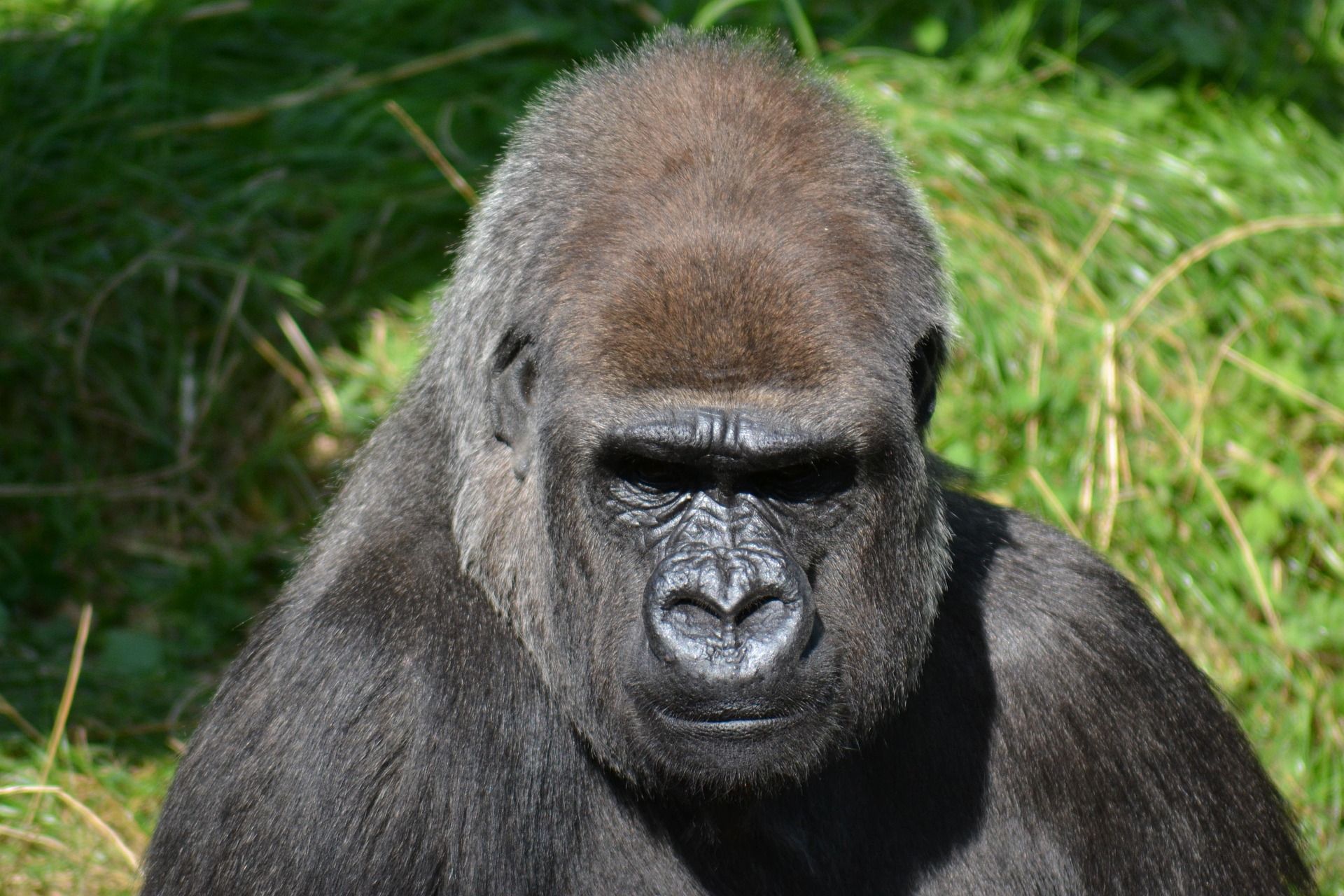
The park’s vegetation frames stunning attractions beyond plants alone, blending flora with wildlife spectacles often seen during wildlife exploitation. These include.
Eastern lowland gorillas, a threatened species of gorilla not found in any other national park in the world, roam bamboo forest grows and transition forests, foraging on stems while families with baby gorillas nest in the undergrowth—a poignant sight during treks.
Eastern chimpanzees, which are rare sites in DR Congo, swing through canopies in montane zones, alongside primates like colobus monkeys.
Over 349 bird species, including endemics such as Grauer’s broadbill, flit among floral layers, earning it Important Bird Area status by Birdlife International.
The dormant volcanoes offer panoramic views of vegetation gradients from low to highland transition, while rare sites like forest elephants and the giant forest genet hide in the swamp forest grows.
Streams teem with 147 fish species, many endemic, and vibrant amphibians, reptiles, and butterflies exploit the rich plant life.
Nearby, the Lwiro Chimpanzee Sanctuary, one of the protected areas around Kahuzi Biega NP adds a rehabilitation angle amid surrounding greenery.
Tourism and Activities done in Kahuzi Biega NP to see flora and vegetation | How Best to See the Kahuzi National Park Flora Highlights?
To experience the flora up close, join guided lowland gorilla trekking through bamboo and rainforests, spotting how plants sustain these icons.
Birdwatching in transition zones reveals feathered inhabitants amid epiphytes, best at dawn or dusk.
Nature walks and hikes to Tshibati Waterfall or volcano summits traverse diverse zones, from swamps to heaths, with local guides sharing insights.
Mountain climbing Mount Kahuzi rewards with subalpine vistas, while community tours and photography safaris capture the essence.
Visit Lwiro Sanctuary en route, or boat on Lake Kivu for riparian views.
Tips: Hire experts, respect rules, pack for variable weather, and book via operators for safe, immersive Congo tours that highlight conservation.
Why Does Flora in Kahuzi-Biega Matter on a Global Scale?
The park’s vegetation is pivotal worldwide, hosting over 1,178 highland species that bolster food webs for threatened fauna like eastern lowland gorillas and elephants, while sequestering carbon and regulating watersheds in the Congo Basin.
Its unbroken altitudinal continuum aids research on plant adaptations, and endemics like Senecio kahuzicus highlight evolutionary hotspots.
As a climate stabilizer and biodiversity ark in sub-Saharan Africa, protecting this flora ensures ecosystem services vital for regional stability and global heritage.
Conservation Challenges in Kahuzi-Biega National Park for the Flora and Vegetation
Flora faces severe pressures from poaching facilitated by the presence of numerous miners in the park, which is a very serious threat in Kahuzi-Biega NP that destroys habitats for bushmeat and ivory. The eastern lowland gorilla is critically endangered due to the devastating impact of poaching and illegal trade.
Farmer encroachments converting forests to agriculture and illegal logging, yielding 1,800 tons of charcoal monthly, pose a threat to the park.
Human activities like artisanal mining scar deep woods and the bamboo forest vegetation, while political unrest in the region, poverty-driven exploitation, and absent buffer zones exacerbate deforestation and wildlife trade, including baby gorillas.
Climate shifts and logistical gaps in management and protection heighten risks to these rare ecosystems in Kahuzi Biega NP in Eastern DR Congo.
Flora Conservation Efforts in Kahuzi-Biega National Park
Efforts include reforestation to restore degraded areas, strict patrols against logging, and community education for sustainable coexistence.
Partnerships with groups like the Wildlife Conservation Society bolster monitoring and boundary marking, while management plans address human-wildlife conflicts and promote ecotourism funding for protection.
Kahuzi-Biega National Park Flora Commonly Asked Questions
- What Animals Are in Kahuzi Biega National Park?
The park teems with diverse and abundant fauna, including eastern lowland gorillas, chimpanzees, forest elephants, over 136 mammal species, and 349 birds—many endemic—observable via eastern lowland gorilla trekking, walks, and climbs amid the verdant flora.
- What Flora Is Found in Parsa National Park?
Parsa National Park in Nepal features sal forests, riverine woods with khair and silk cotton trees, sabai grass, and chir pine in its ecosystems.
Conclusion
Kahuzi-Biega’s rare flora—from lowland jungles to subalpine heather across the low-altitude sector and highland sector zones—shelters gorillas, birds, and endemics like Senecio kahuzicus. Facing poaching and logging, it needs protection. Visit ethically: trek, hike, and witness biodiversity because your trip funds conservation. Come see Congo’s living legacy—save it by experiencing it—plan your visit with us now to witness and support this Congo gem.

Over 300 excellent reviews on TripAdvisor
Over 50 excellent reviews on Safaribookings.
Over 50 excellent reviews on Safaribookings.
12+ years of experience.
Best price guarantee.

Cate

Samuel
To plan your tailor-made safari and tours of East Africa, consult with a safari expert...
Obtain exceptional safari guidance by either calling us or scheduling a video conference with our proficient specialists.